

What is 3D Printing?
The Future of Making Things, Explained

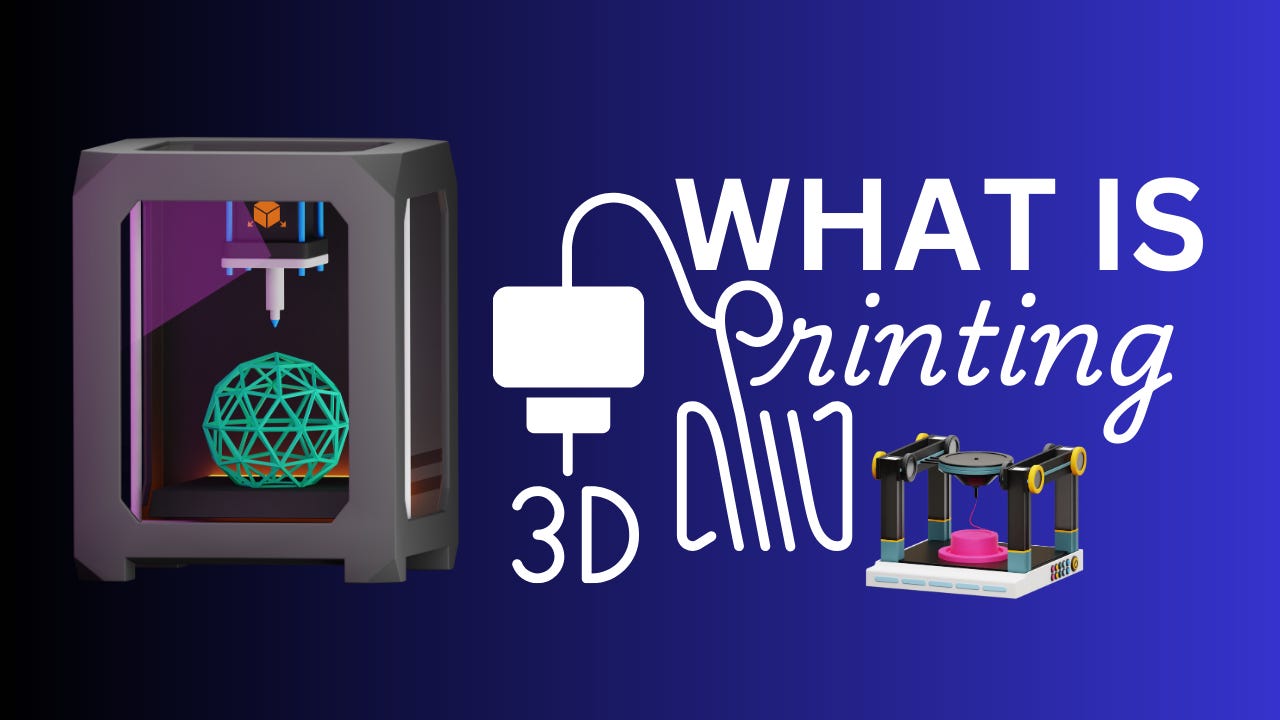
Have you ever imagined being able to create physical objects from scratch, right in your own home or workspace? Thanks to 3D printing, this futuristic idea is now a reality! Whether you're a hobbyist, engineer, artist, or just curious about technology, 3D printing is revolutionizing the way we design, create, and innovate.
What is 3D Printing?
3D printing, also known as additive manufacturing, is a process of creating three-dimensional objects by layering material one thin slice at a time. Unlike traditional manufacturing methods that involve cutting, drilling, or molding, 3D printing builds objects from the ground up, making it incredibly versatile and efficient.
How Does 3D Printing Work?
The process of 3D printing typically involves the following steps:
Designing the Model:
It all starts with a digital 3D model, which can be created using CAD (Computer-Aided Design) software or downloaded from online repositories like Thingiverse or Printables.Slicing the Model:
The 3D model is then "sliced" into hundreds or thousands of thin horizontal layers using slicing software. This software generates a set of instructions (G-code) that the 3D printer follows.Printing the Object:
The 3D printer reads the G-code and begins printing the object layer by layer. Depending on the type of printer, it may use melted plastic, liquid resin, or even powdered material to create the object.Post-Processing:
Once the print is complete, some objects may require post-processing, such as removing support structures, sanding, or painting, to achieve the desired finish.
Types of 3D Printing Technologies
There are several types of 3D printing technologies, each with its own strengths and applications:
FDM (Fused Deposition Modeling): The most common type, using melted plastic filament to create objects. Great for beginners and hobbyists.
SLA (Stereolithography): Uses a laser to cure liquid resin into solid objects. Ideal for high-detail prints like miniatures or jewelry.
SLS (Selective Laser Sintering): Uses a laser to fuse powdered material (like nylon) into solid objects. Often used for industrial applications.
Applications of 3D Printing
3D printing is transforming industries and hobbies alike. Here are just a few of its incredible applications:
Prototyping: Engineers and designers use 3D printing to quickly create prototypes and test their ideas.
Healthcare: From custom prosthetics to dental implants and even bioprinting tissues, 3D printing is saving lives and improving patient care.
Education: Schools and universities use 3D printers to teach students about design, engineering, and creativity.
Art and Fashion: Artists and designers are pushing the boundaries of creativity with 3D-printed sculptures, jewelry, and even clothing.
Home and DIY: From custom phone cases to replacement parts for household items, 3D printing empowers individuals to create solutions tailored to their needs.
Why is 3D Printing Important?
3D printing is more than just a cool gadget—it's a game-changer. It democratizes manufacturing, allowing anyone with a printer to bring their ideas to life. It reduces waste by using only the material needed to create an object. And it opens up endless possibilities for innovation, from space exploration to sustainable living.
Whether you're a beginner or an expert, 3D printing offers something for everyone. Stay tuned as we dive deeper into this amazing technology, explore its possibilities, and show you how to get started on your own 3D printing journey!